
How to Check Criminal History in Omer
Begin with the event, not a broad name query. Write down the date, time, Omer location, and any incident or case number. The official City of Omer website gives the City Hall channel for a routing question. It does not advertise a police records portal. If the responding office is unknown, ask City Hall or county dispatch to identify it before filing a request.
- Ask Omer City Hall which police, sheriff, state, or tribal agency responded.
- Request the incident report from that agency and describe the event with precise facts.
- Call the Arenac Sheriff for current custody or booking information.
- Search the 81st District Court in MiCOURT, then the 23rd Circuit after a felony bindover.
- Use ICHAT later for reportable Michigan public criminal history, while keeping its exclusions in mind.
This sequence separates an allegation, a jail entry, a filed charge, and a final outcome. Each is held by a different custodian. A name match alone should not be treated as proof that the record belongs to the intended person.
If the sheriff made the record, the county FOIA form asks for requester contact details, a precise record description, copy or inspection choices, and a signature. If MSP or another agency responded, use that agency's process. The city inquiry form is useful for routing, but it is not the formal request channel for every Omer-area incident.
Keep the date and source of each result. Correct a wrong Omer disposition through the court that entered it. When the court file is right but ICHAT is not, use MSP's record-review process and provide the source order. OTIS errors drawn from a judgment go to the sentencing court, while supervision details go to MDOC or the assigned agent.
Omer Criminal Records in Michigan's Smallest City
Omer counted 274 residents in the 2020 Census and calls itself Michigan's smallest city. That size helps explain why county systems do the heavy work. The city departments page lists code enforcement, assessor, public works, fire, water, and cemetery functions, but no police department. Official research also found no Omer arrest form, blotter, police app, separate jail, or municipal court.
The official Omer homepage shows the city and its local setting. The captured view below helps a reader recognize the correct municipal source before moving to county offices.
That city source is for local routing and administrative facts. Sheriff, court, and state records remain with their own agencies.
The Omer Police Department
No Omer Police Department is listed on the official city departments page. Do not invent a city police counter or send every request to the county by default. An incident near Omer may involve the Arenac Sheriff, Michigan State Police, or another agency with lawful jurisdiction. The report stays with the responding agency even when the event occurred inside the city.
The Omer departments directory documents the city offices that are actually published. Its captured page is useful because the missing police listing is itself an important routing fact.
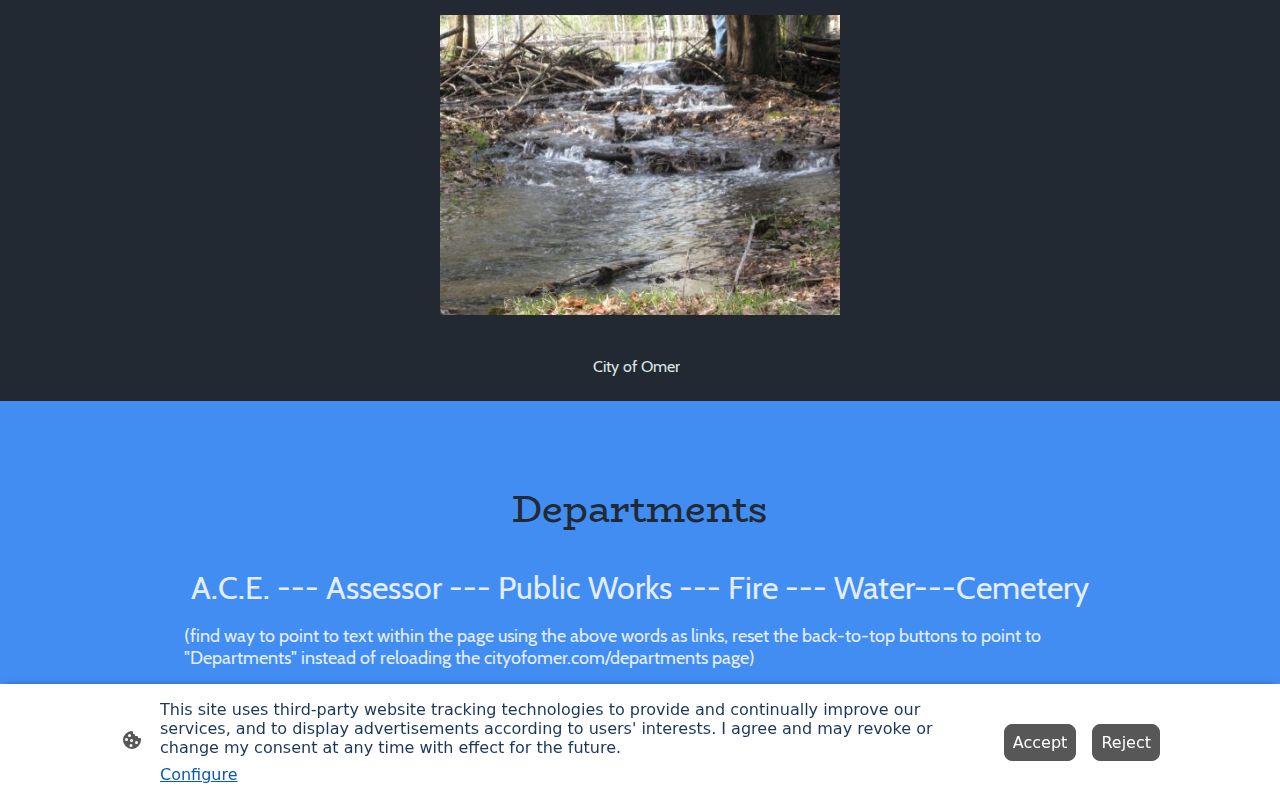
Ask which agency answered the call, then use that office's records process. The county FOIA form reaches county-held records; it does not automatically reach a state, tribal, or city record.
When Only the Omer Location Is Known
A place and time can be enough to find the right custodian. Give City Hall or dispatch the street, cross street, landmark, and approximate time. State whether the event involved a traffic stop, crash, patrol response, arrest, fire call, or 911 call. That level of detail helps distinguish a sheriff response from an MSP or other agency response.
The city's online inquiry form has mandatory Name and Message fields with a Send control. The screenshot below shows the narrow scope of that form.
Use the form for a routing question, not as a substitute for a formal county FOIA request. Once the agency is known, send the detailed request to that custodian.
Arrests and Bookings in Omer
An Omer arrest normally produces at least two separate records. The arresting office creates the incident or probable-cause report. If the person is booked locally, the Arenac County Jail creates the custody entry, fingerprints, photograph, descriptors, charge data, bond information, and release entry. No official public Omer booking log or city holding roster was found.
Call the Arenac Sheriff at 989-846-3002 with the full name and approximate arrest date for current custody. The sheriff and 46-bed jail are at 126 Grove Street in Standish. A written request for releasable booking or arrest material may go through the county FOIA process. For a deeper countywide explanation, the Arenac arrest history page distinguishes the jail entry from the filed court case.
A very recent arrest may not yet appear in MiCOURT. After charging, check 81st District Court for arraignment and bond. Follow a felony to 23rd Circuit only when the district docket shows bindover. Later, ICHAT may reflect a reportable arrest and disposition, but a lag or exclusion can make the statewide product differ from the court file.
Note: Booking proves that custody occurred; it does not establish guilt or show the final disposition.
Omer's Old Courthouse Is Not a Records Counter
Omer's history can mislead a map-based records search. The city began as Rifle River Mills, joined Arenac County in 1883, and incorporated in 1903. Ye Olde Courthouse is a former county courthouse that now preserves local artifacts and hosts community events. It is not the clerk's office for a current criminal file.
Modern Omer cases are kept in Standish. Misdemeanors and early felony stages go to the 81st District Court. A felony that is bound over continues in the 23rd Circuit Court. Both courts operate from the Arenac County Building at 120 N. Grove Street. Search the Arenac location in MiCOURT and contact the correct clerk when the online docket is missing or unclear.
Omer Municipal Court Records
Omer has no separate municipal criminal court or city case-search portal in the official sources reviewed. City ordinance and state misdemeanor cases route to the 81st District Court. Felony complaints begin there as well, then can receive a second case number in circuit court after a bindover. Searching for an “Omer court” can therefore miss the official file.
| Court Name | 81st District Court, Arenac location; 23rd Circuit Court after felony bindover |
|---|---|
| Case Types Heard | District handles misdemeanors up to one year and early felony hearings; Circuit holds post-bindover felony cases |
| Case Lookup Channel | MiCOURT by name or case number, followed by the relevant clerk |
| What the Docket Shows | Charges, filing and hearing events, status, disposition, sentence, and financial entries when published |
| Copies and Fees | Ask the court clerk for plain or certified copies; a current local copy schedule was not located |
Read the final outcome, not just the first charge. “Bound over” means a felony moved to circuit court after a probable-cause stage; it is not a conviction.
Search Omer Criminal Cases in Arenac
Open MiCOURT and select the 81st District Court's Arenac location. Search by full name or a known case number. Record the filing date, charge, status, and disposition. If the district events show a felony bindover, repeat the search in the 23rd Circuit Court's Arenac location and compare the party and dates.
A result can be absent because the matter is too new, old, confidential, filed under a different spelling, or never charged. Juvenile and other protected case types are not public search shortcuts. The official clerk remains the source for the case file and certified copy.
Where Omer Records End Up
An Omer event does not become one merged file. The responder keeps the police report. Arenac Jail keeps the booking entry. The prosecutor decides whether to authorize a complaint. District court records the initial case, and circuit court takes a felony after bindover. Courts then report eligible final dispositions to MSP's Criminal Justice Information Center.
Record flow: Responding agency › Arenac County Courts › Michigan State Police CJIC
ICHAT is the public name-based statewide product and costs $10 per search. It omits warrants, federal and tribal matters, traffic cases, juvenile records, suppressed records, and local misdemeanors. A clear ICHAT result cannot resolve every Omer question.
Omer Criminal Records After a Set-Aside
Michigan calls the relief process “setting aside” a conviction, while many people use “expungement.” A dismissal alone does not erase the arrest cycle. Application-based relief begins with the court that entered the conviction. Automatic relief under Clean Slate rules applies only when the statute's limits, waiting periods, and exclusions are met.
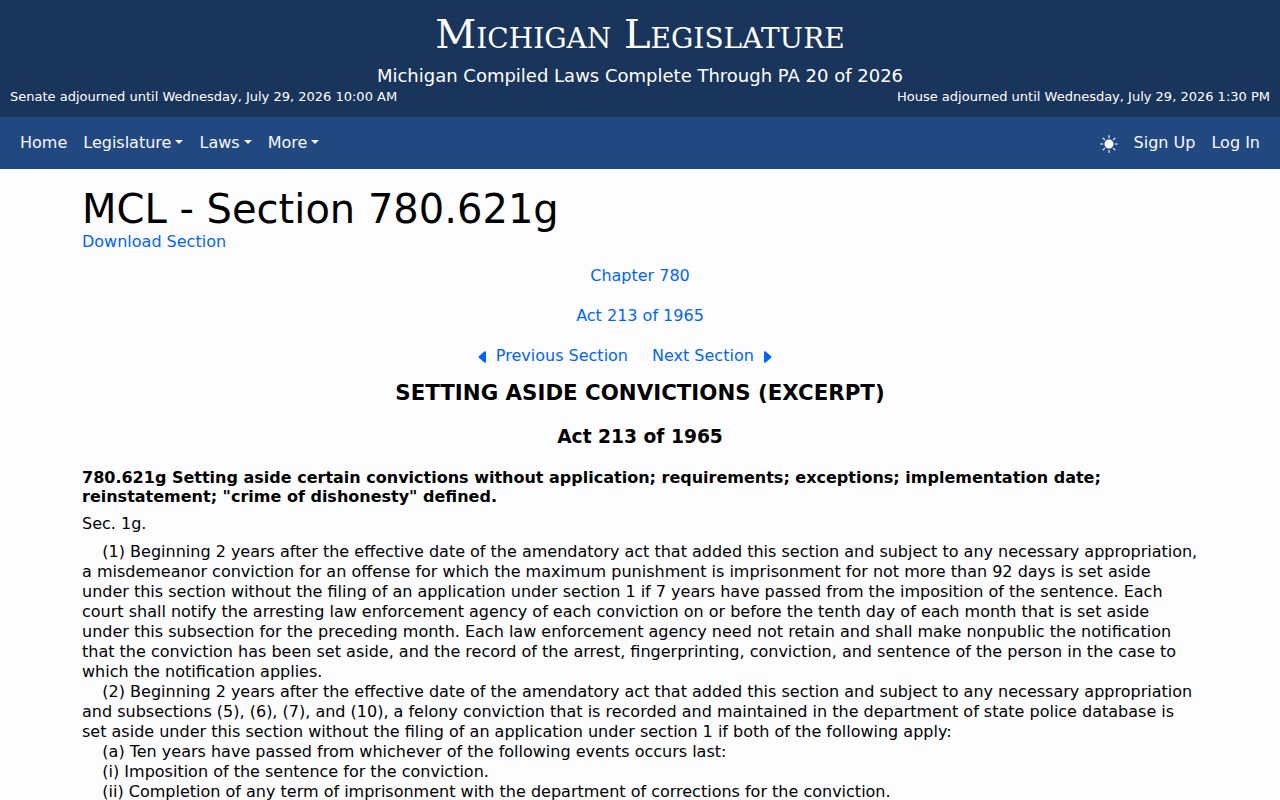
The Michigan application-based set-aside law defines the main authority. The captured statute page below connects Omer readers to the real state rule.
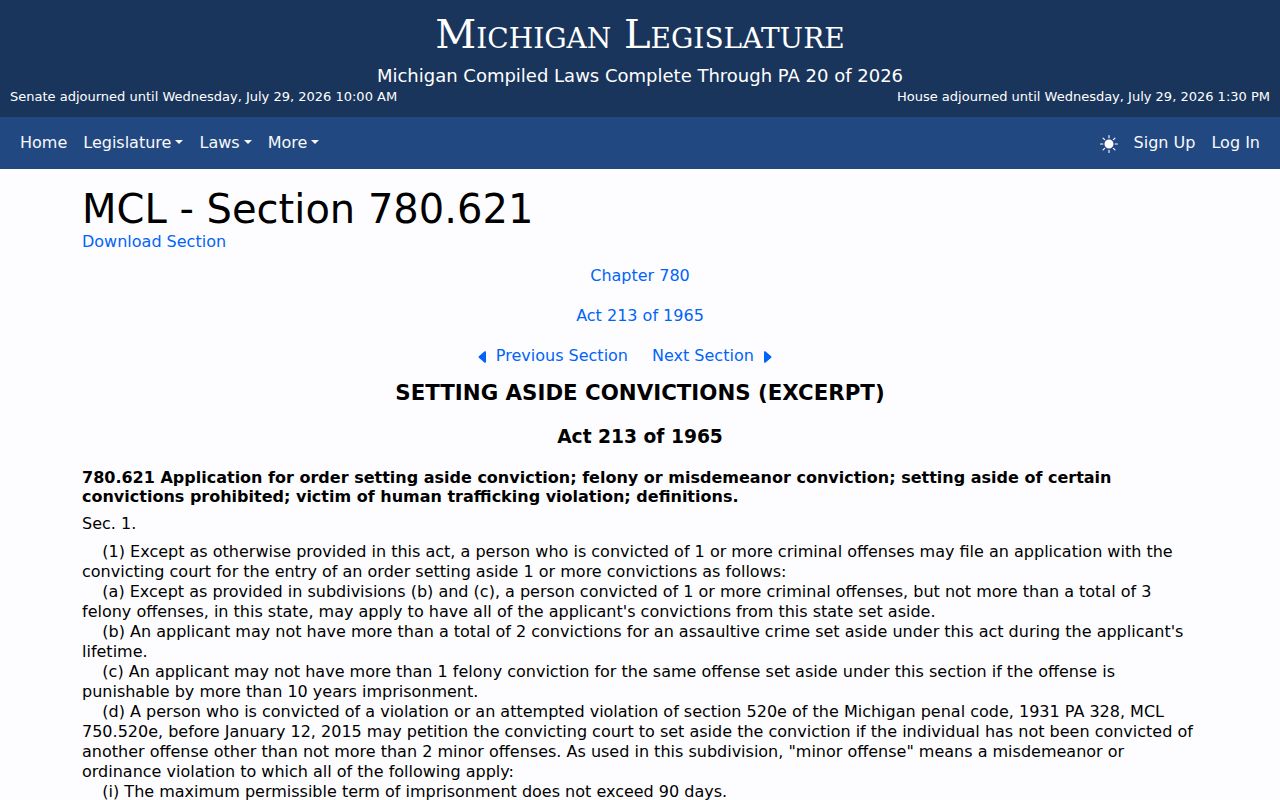
Confirm each Omer case number with the district or circuit clerk before applying. Keep the signed order so a court or repository error can be traced to its source.
The separate Michigan automatic set-aside provision governs Clean Slate processing. Its captured page supplies the statutory source for automatic relief.
Portal display can lag a legal change. Eligibility and a court order matter more than an old search result.
Omer Court Forms and Record Corrections
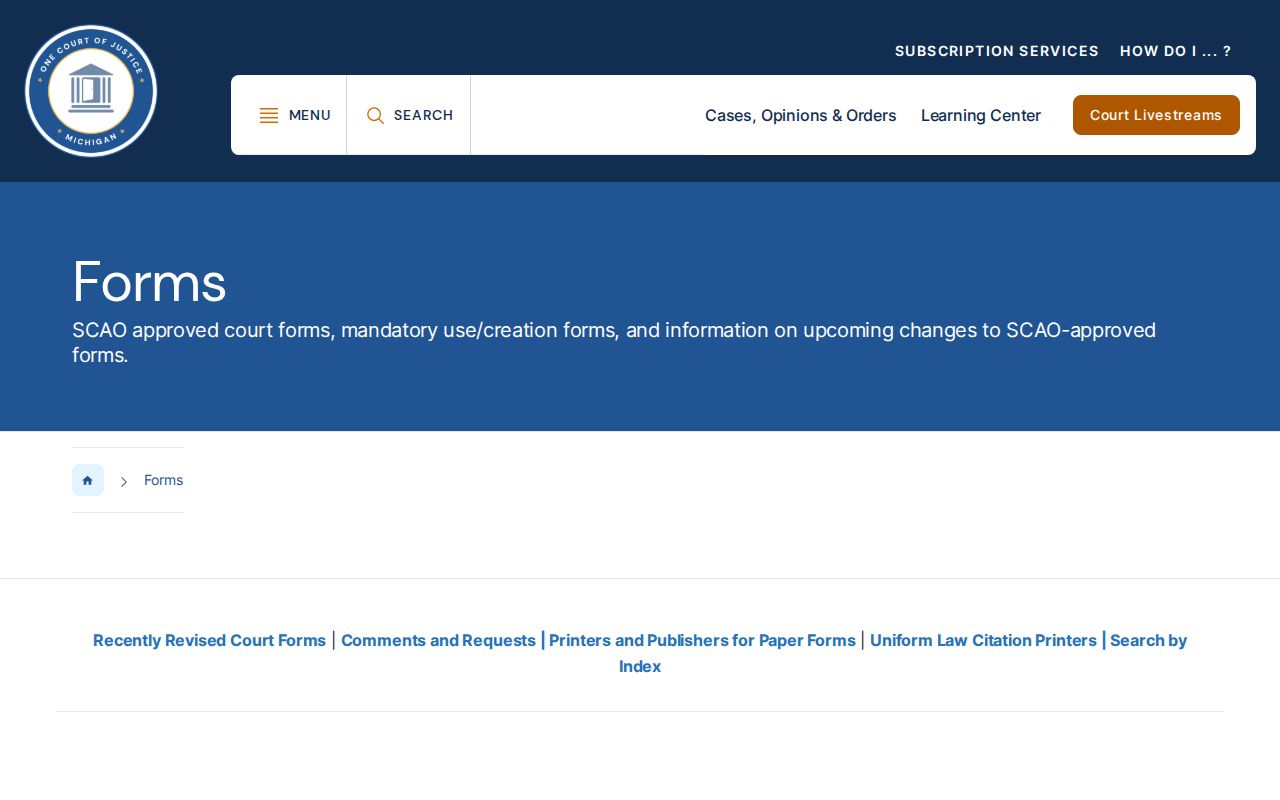
Use the Michigan Courts forms catalog for the approved set-aside application and related filing papers. File in the court that entered the conviction, follow the current fingerprint and service directions, and notify the Arenac Prosecuting Attorney when the form requires it. An error in a disposition should first go to the court that supplied the data.
The Michigan court forms library is the official forms source. The image below shows the statewide forms channel rather than an unofficial packet.
After a correction or set-aside, follow up with the court, MSP, or MDOC system that still shows the wrong entry. Each downstream office needs the source order.
Public Access Rules
Access depends on both the record and its custodian. Michigan FOIA applies to nonexempt city and county public-body records. Court files follow Michigan Court Rule 8.119. MSP receives reportable arrests and dispositions under state law. Active investigations, victim data, juvenile material, personal identifiers, LEIN data, and sealed matters can be withheld or redacted.
Key Statutes:
Michigan Freedom of Information Act creates a request and appeal process for nonexempt public-body records.
Michigan Court Rule 8.119 governs public inspection of court records and protected material.
MCL 28.243 requires qualifying arrest and disposition reports to reach MSP.
Ask for a defined record, identify the event, and state whether electronic or certified copies are needed. A focused request is easier for the right office to process.
Michigan FOIA generally provides a five-business-day response framework, subject to a permitted extension. A response can grant, deny, or partly grant a request and is not always the date records are produced. Allowable labor, copying, and mailing charges may apply. Keep the Omer routing message separate from the formal request, and retain any denial notice because it should identify the legal basis and review options.